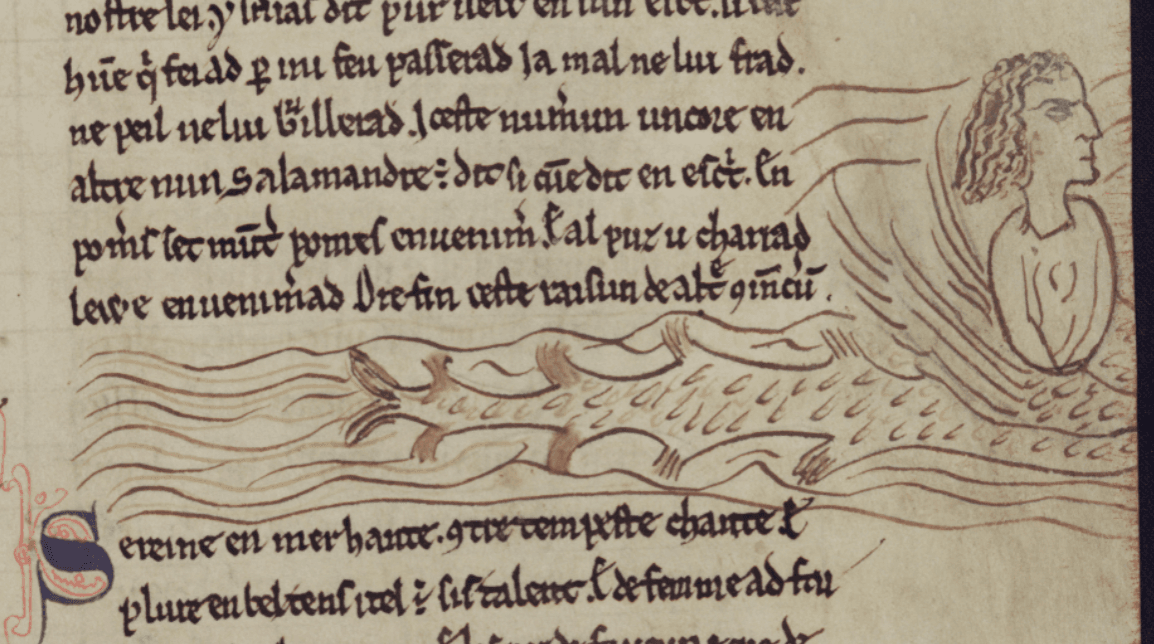
FEMINANIMALS is a three-day international conference investigating representations of women as non-human animals and of the relationship between women and non-human animals in literature, arts, and other media across languages, from medieval to contemporary times. The last decades have witnessed an explosion of theoretical discourses directed towards a critique of humanism and a re-evaluation of humans’ interactions with the non-human world and wider ecosystem. Since the 1970s such a focus has found a privileged expression in ecofeminist theories, which have started to interrogate and deconstruct the history-long, negatively connoted association of women with non-human animals and to denounce the fundamental links between the oppression of women and that of non- human nature simultaneously perpetrated by the patriarchal system. From the ecofeminist manifestos of the 1990s (Gaard 1993, Gruen 1993, Plumwood 1993, Adams and Donovan 1995), the field of inquiry examing the deleterious intersections of anthropocentric and androcentric attitudes has been prolifically expanded and enriched by a notable array of theoretical standpoints adopting diverse disciplinary perspectives and an increasingly intersectional approach, that is, bringing to the fore of the analysis other categories of oppression that ought to be necessarily considered alongside gender and species, such as race, sexuality, class, physical abilities. Recent contributions to the field include Alaimo and Hekman 2008, Decka 2012, Adams and Gruen 2014, Gaard 2017, Vakoch and Mickey 2017, Braidotti 2022, and Taylor 2024. Theoretical discourses on the intersected nature of different systems of oppressions have been productively applied to the study of literature and other arts. Some of the above-mentioned works already include references to or analysis of literary and artistic sources (Taylor 2024); other contributions directly postulate, for instance, the benefits of intertwining ecofeminism and literary criticism (Gaard and Murphy 1998, Vakoch and Mickey 2019, and Vakoch 2023). Increasingly moving away from a privileged Anglo-American-centred perspective, moreover, scholarship is embracing more comprehensive assessments of literary and artistic portrays of nature, non-human animals, and humans’ relationship with them. Following in the footsteps of such recent contributions, dialoguing with different theoretical approaches and exploring different media, FEMINANIMALS seeks to enrich and foster ongoing discussions around the connections and intersections between our changing constructions of womanhood and animality by looking at representations of women as non-human animals and of the relationship between women and non-human animals, from medieval to contemporary times, assessing the significance and implications of those representations against the backdrop of diverse historical and cultural contexts. Across time and space, literature, arts, and other media have been pervaded by portrayals of women as/and animals, from the moralistic, religiously informed intertwining of gender and species in medieval bestiaries, exempla such as the cuento XXXV “La mujer brava” in Don Juan Manuel’s El Conde Lucanor or works like Boccaccio’s Il Corbaccio (ca. 1365) describing women as an “animale imperfetto” to the countless retellings and translations of the legend of the half-human half-snake Melusine in widely circulating texts like Jean d’Arras’s Mélusine (ca. 1393) and its adaptations in the following centuries, from the woman-animal erotic unions and shapeshifting in the late seventeenth- and early eighteenth-century supernatural tales Liaozhai zhiyi by Pu Songling to the numerous poems dedicated to wild, exploited, or domesticated animals by Romantic and Victorian women authors such as Anna Letitita Barbauld’s “A Mouse’s Petition” (1773) and Elizabeth Barrett Browning’s “To Flush, My Dog” (1843), from Odette’s transformation into a swan in Pyotr Ilyich Tchaikovsky’s ballet Swan Lake (1877) to visual depictions of woman-animal entanglements like Oskar Kokoschka’s painting Mädchenakt auf galoppierendem Schimmel in Weiherlandschaft (1905) and the surrealist works of Leonora Carrington who herself identified as a “female human animal”. The manifold associations between women and non-human animals continue to be prominent in recent times, enriched by new media and perspectives, with meaningful examples including Clarice Lispector’s novel A paixão segundo G.H (1964) centring on the unsettling encounter of the female protagonist with a cockroach, Marie Darrieussecq’s satirical tale of a woman’s metamorphosis into a female pig in Truismes (1996), the Africanfuturist speculative fiction of Nnedi Okorafor who endows the heroine of Who Fears Death (2010) with the magical ability to turn into a vulture and dedicated her novella Binti (2015) to a jellyfish, and the central place that the porous borders between women and animals occupy in Athina Rachel Tsangari’s cinema, particularly in Attenberg (2010) and her short film The Capsule (2012). What can these pervasive representations of women as/and animals in different cultures and historical periods tell us about the complexities and intersections of shifting notions of gender and species, the fraught line between humanity and animality, and the entwined practices of domination and othering to which women and animals have been subjected? How can we look at such a variety of literary and artistic sources with the benefit of decades of theoretical perspectives that have tackled the historical, philosophical, social, cultural, and political implications of the multifaceted association of women and non-human animals? In what crucial ways can an interdisciplinary, comparative, and temporally wide approach help us think about and rethink this fundamental pairing today, as we continue to navigate, experience, suffer, and/or reclaim it against the backdrop of a dramatic environmental crisis, a deterioration of our relationship with nature and other living creatures, and a new rising tide of sexism that is infiltrating the virtual and real-life world? The conference aims to foster new conversations around these questions by inviting scholars to examine representations of women as/and animals across languages and cultures, from medieval times to the present day. We encourage proposals considering works belonging to different media and genres, focusing on canonical as well as non-canonical authors and artists, and dialoguing with diverse theoretical and methodological approaches, such as human-animal studies, posthumanist studies, new materialism studies, ecofeminist studies, animal studies, critical animal studies, animality studies, gender studies, critical race and postcolonial studies, queer studies, psychoanalytic and post-structural studies, affect theory, and other relevant fields of inquiry.
All EventsLiberal Arts, Humanities & Social Sciences
Liberal Arts, Humanities & Social SciencesConference, Meetings, Congress
FEMINANIMALS: Representations of Women and/as Animals in Literature, Arts, and Other Media
When3 Days
13th – 15th of April 2027
13/04/2027 → 15/04/2027
WhereIn-Person
University of Oxford, Oriel College.
5 months 24 days to goVerified Gathering
Share With Colleagues:
Attend & Register
Event Pass & Registration
About this Academic Event
Related Topics & Fields
Location & Venue
Where
University of Oxford, Oriel College.
Poster Studio300 DPI
Print & Share Poster
Generate customizable high-resolution print posters, digital story banners, and QR codes for this event.