Conferences, Symposiums & Summits
Browse verified academic conferences, calls for papers, and research workshops curated for scholars and faculty worldwide.

Reclaiming Identity and Memory: Creative Resistance, Indigeneity, and Cultural Production in the Middle East and Beyond
Thank you for your interest in Reclaiming Identity and Memory: Creative Resistance, Indigeneity, and Cultural Production in the Middle East and Beyond. This page provides practical information for conference participants. Additional details will be posted as they become available.
Conference Dates October 15–17, 2027
Host Institution The conference is hosted by the Middle East and North Africa (MENA) Studies Program at Marquette University in collaboration with the Arab and Muslim Women's Research and Resource Institute (AMWRRI).
Conference Venue The conference will be held at Marquette University in Milwaukee, Wisconsin, USA. Specific buildings, room assignments, campus maps, and parking information will be announced closer to the conference dates.

LITTORAL Conference 2027
LITTORAL 2027 – Inclusive Coasts is organised in cooperation with the University of Greenwich, London and Ocean and Coastal Futures (UK). It will mark the 18th EUCC International Conference. The conference continues a long-standing European collaboration bringing together academia, policy-makers, practitioners, and coastal stakeholders.
Since 1987, EUCC has organised biannual conferences on coastal and marine issues. Initially held under the name Coastlines until 1999, these events joined forces with Eurocoast in 2002, giving rise to the LITTORAL Conferences.
Held every two years at universities across Europe, LITTORAL conferences are promoted by EUCC, an NGO based in the Netherlands with an extensive network spanning the Mediterranean, Black Sea, Baltic Sea, North Sea, and Atlantic Ocean.
Focusing on the littoral zone—the dynamic interface between land and sea—the conferences provide a platform for knowledge exchange, collaboration, and dialogue across the European coastal community.

CLMPST 2027
Welcome to CLMPST 2027, the 18th edition of the International Congress of Logic, Methodology and Philosophy of Science and Technology.
CLMPST is the premier forum on Logic, Methodology and Philosophy of Science and Technology. Its aim is to bring together active researchers in this broad field. The International Congress of Logic, Methodology and Philosophy of Science and Technology (CLMPST) is organized under the auspices of the Division of Logic, Methodology and Philosophy of Science and Technology of the International Union of History and Philosophy of Science and Technology (IUHPST/DLMPST).
CLMPST has a long history — it started in 1960, and has been held every four years since then in capital cities and/or by leading university centres in this field. Recent previous CLMPST Congresses were held in Buenos Aires (2023), Prague (2019), Helsinki (2015), Nancy (2011), and Beijing (2007). The 2027 edition will take place at Kobe University in Kobe, Japan.
The call for individual presentation abstracts/symposium proposals is now available on this CLMPST website. Information about registrations and the conference program will be announced later.
We invite papers and symposia on all topics pertaining to our fields, presented by researchers from all regions and cultures of our academic world.
Twenty-Second International Conference on Interdisciplinary Social Sciences-Hybrid
The Interdisciplinary Social Sciences Research Network is brought together by a common interest in disciplinary and interdisciplinary approaches, within and across the various social sciences, and between the social, natural and applied sciences. We seek to build an epistemic community where we can make linkages across disciplinary, geographic, and cultural boundaries. As a Research Network, we are defined by our scope and concerns and motivated to build strategies for action framed by our shared themes and tensions.
The Twenty-Second International Conference on Interdisciplinary Social Sciences calls for research addressing the following annual themes.

16th European Social Science History Conference (ESSHC)
The Oral History and Life Stories Network is one of the 28 networks of the ESSHC. It brings together oral historians, life story researchers and practitioners who explore memory, narratives, and history. Broadly, we want to encourage papers that explore methodological questions and challenges as well as the relationship between oral histories and the construction and analysis of life stories, both in terms of processes and outcomes.
This is a thematically open Call for Papers, but we would like to stimulate some topics that may attract broader interest:
Theoretical and methodological challenges of oral history today Impact of the digitization process on doing oral history and the analysis; challenges of digitization (audio and video), e.g. transcript, keywording, archiving Reuse of (archived) oral history materials Shared authority/sharing authority Reflections on legal issues and ethical questions in oral history Themes of oral history today, e.g. whose memories are collected, analyzed, and archived Teaching oral history and supervision of oral history projects – experiences, challenges, concepts Reflections on combining oral history and life story methods Relations of oral history to other fields (e.g. social sciences, ethnology, memory studies, etc.) We welcome panel proposals as well as individual paper proposals. Panel proposals must be international in membership (and from different institutions). The decisive selection criterion is the quality of the proposed paper, respectively, the proposed contributions in a panel, and their coherence.

Marcella Althaus-Reid’s Indecent Theology – The Caminata Continues
In May 2027, the pioneering and provocative theologian Marcella Althaus-Reid would have turned 75. Her work continues to inspire critical conversations and transformative practices within theology, religious studies, and beyond. To mark this occasion, the conference gathers former companions and colleagues who knew and worked alongside her, as well as scholars and practitioners who are inspired by Althaus-Reid’s legacy and continue to engage with and expand upon her theological work today. Hosted at the School of Divinity in Edinburgh – where Marcella Althaus-Reid herself once taught – this conference is dedicated to honoring her life and enduring legacy. We gather not only to remember and to share, but also, in Althaus-Reid’s own words, to “go further”. Together, we carry forward the Caminata as a collective journey of critical reflection, solidarity, and ongoing commitment to liberation.
This conference invites participants to engage with Althaus-Reid’s theological vision, to trace the continuing resonances of her work in contemporary contexts, and to nurture new conversations across disciplines and communities. We warmly welcome scholars as well as interested participants from all backgrounds, whether you are deeply familiar with the topic or simply curious, and invite you to take part in the ongoing dialogue.

FEMINANIMALS: Representations of Women and/as Animals in Literature, Arts, and Other Media
FEMINANIMALS is a three-day international conference investigating representations of women as non-human animals and of the relationship between women and non-human animals in literature, arts, and other media across languages, from medieval to contemporary times. The last decades have witnessed an explosion of theoretical discourses directed towards a critique of humanism and a re-evaluation of humans’ interactions with the non-human world and wider ecosystem. Since the 1970s such a focus has found a privileged expression in ecofeminist theories, which have started to interrogate and deconstruct the history-long, negatively connoted association of women with non-human animals and to denounce the fundamental links between the oppression of women and that of non- human nature simultaneously perpetrated by the patriarchal system. From the ecofeminist manifestos of the 1990s (Gaard 1993, Gruen 1993, Plumwood 1993, Adams and Donovan 1995), the field of inquiry examing the deleterious intersections of anthropocentric and androcentric attitudes has been prolifically expanded and enriched by a notable array of theoretical standpoints adopting diverse disciplinary perspectives and an increasingly intersectional approach, that is, bringing to the fore of the analysis other categories of oppression that ought to be necessarily considered alongside gender and species, such as race, sexuality, class, physical abilities. Recent contributions to the field include Alaimo and Hekman 2008, Decka 2012, Adams and Gruen 2014, Gaard 2017, Vakoch and Mickey 2017, Braidotti 2022, and Taylor 2024. Theoretical discourses on the intersected nature of different systems of oppressions have been productively applied to the study of literature and other arts. Some of the above-mentioned works already include references to or analysis of literary and artistic sources (Taylor 2024); other contributions directly postulate, for instance, the benefits of intertwining ecofeminism and literary criticism (Gaard and Murphy 1998, Vakoch and Mickey 2019, and Vakoch 2023). Increasingly moving away from a privileged Anglo-American-centred perspective, moreover, scholarship is embracing more comprehensive assessments of literary and artistic portrays of nature, non-human animals, and humans’ relationship with them. Following in the footsteps of such recent contributions, dialoguing with different theoretical approaches and exploring different media, FEMINANIMALS seeks to enrich and foster ongoing discussions around the connections and intersections between our changing constructions of womanhood and animality by looking at representations of women as non-human animals and of the relationship between women and non-human animals, from medieval to contemporary times, assessing the significance and implications of those representations against the backdrop of diverse historical and cultural contexts. Across time and space, literature, arts, and other media have been pervaded by portrayals of women as/and animals, from the moralistic, religiously informed intertwining of gender and species in medieval bestiaries, exempla such as the cuento XXXV “La mujer brava” in Don Juan Manuel’s El Conde Lucanor or works like Boccaccio’s Il Corbaccio (ca. 1365) describing women as an “animale imperfetto” to the countless retellings and translations of the legend of the half-human half-snake Melusine in widely circulating texts like Jean d’Arras’s Mélusine (ca. 1393) and its adaptations in the following centuries, from the woman-animal erotic unions and shapeshifting in the late seventeenth- and early eighteenth-century supernatural tales Liaozhai zhiyi by Pu Songling to the numerous poems dedicated to wild, exploited, or domesticated animals by Romantic and Victorian women authors such as Anna Letitita Barbauld’s “A Mouse’s Petition” (1773) and Elizabeth Barrett Browning’s “To Flush, My Dog” (1843), from Odette’s transformation into a swan in Pyotr Ilyich Tchaikovsky’s ballet Swan Lake (1877) to visual depictions of woman-animal entanglements like Oskar Kokoschka’s painting Mädchenakt auf galoppierendem Schimmel in Weiherlandschaft (1905) and the surrealist works of Leonora Carrington who herself identified as a “female human animal”. The manifold associations between women and non-human animals continue to be prominent in recent times, enriched by new media and perspectives, with meaningful examples including Clarice Lispector’s novel A paixão segundo G.H (1964) centring on the unsettling encounter of the female protagonist with a cockroach, Marie Darrieussecq’s satirical tale of a woman’s metamorphosis into a female pig in Truismes (1996), the Africanfuturist speculative fiction of Nnedi Okorafor who endows the heroine of Who Fears Death (2010) with the magical ability to turn into a vulture and dedicated her novella Binti (2015) to a jellyfish, and the central place that the porous borders between women and animals occupy in Athina Rachel Tsangari’s cinema, particularly in Attenberg (2010) and her short film The Capsule (2012). What can these pervasive representations of women as/and animals in different cultures and historical periods tell us about the complexities and intersections of shifting notions of gender and species, the fraught line between humanity and animality, and the entwined practices of domination and othering to which women and animals have been subjected? How can we look at such a variety of literary and artistic sources with the benefit of decades of theoretical perspectives that have tackled the historical, philosophical, social, cultural, and political implications of the multifaceted association of women and non-human animals? In what crucial ways can an interdisciplinary, comparative, and temporally wide approach help us think about and rethink this fundamental pairing today, as we continue to navigate, experience, suffer, and/or reclaim it against the backdrop of a dramatic environmental crisis, a deterioration of our relationship with nature and other living creatures, and a new rising tide of sexism that is infiltrating the virtual and real-life world? The conference aims to foster new conversations around these questions by inviting scholars to examine representations of women as/and animals across languages and cultures, from medieval times to the present day. We encourage proposals considering works belonging to different media and genres, focusing on canonical as well as non-canonical authors and artists, and dialoguing with diverse theoretical and methodological approaches, such as human-animal studies, posthumanist studies, new materialism studies, ecofeminist studies, animal studies, critical animal studies, animality studies, gender studies, critical race and postcolonial studies, queer studies, psychoanalytic and post-structural studies, affect theory, and other relevant fields of inquiry.
23rd International Conference on Technology, Knowledge, and Society-Hybrid
The Twenty-Third International Conference on Technology, Knowledge, and Society is brought together by a shared interest in the complex and subtle relationships between technology, knowledge and society. We seek to build an epistemic community where we can make linkages across disciplinary, geographic, and cultural boundaries. As a Research Network we are defined by our scope and concerns and motivated to build strategies for action framed by our shared themes and tensions.
The Twenty-Third International Conference on Technology, Knowledge, and Society features research addressing the following annual themes and special focus:

Empire’s Fruit: Colonial Ecologies, Food Systems, and Imperial Power
Empire’s Fruit: Colonial Ecologies, Food Systems, and Imperial Power is a one-day interdisciplinary conference that will critically examine the central role of food, plants, and agricultural knowledge in the formation and maintenance of colonial and imperial systems from the early modern period to the present. By positioning food as both a material infrastructure and a cultural instrument of empire, the conference will bring together scholars from history, environmental humanities, food studies, anthropology, geography, postcolonial studies, and material culture to generate new interdisciplinary approaches to colonial power, ecological transformation, and global inequality.

DHNB 2027
In 2027, Umeå University will host the international DHNB conference, which brings together researchers from across the Nordic and Baltic regions. The theme will be “Human(ities) in the Loop,” highlighting the role of the humanities and humanity at the center of technological development.
The theme for the 2027 conference is Human(ities) in the Loop. It draws on the concept of “human in the loop,” which highlights the role of humans in AI development, but broadens the perspective to include the importance of the humanities in technological and societal systems.
“Through this theme, we want to emphasize how humans and the humanities play a central role in technological development,” said Evelina Liliequist and Coppélie Cocq
The focus is on the loops and structures in which the humanities are inherently embedded, whether before, during, or beyond the age of AI.

FTSC 2027- Hybrid
The 4th edition of the Fashion as a Tool for Social Change (FTSC–27) conference brings together academicians, researchers, designers, industry professionals, policymakers, and craft practitioners to examine the evolving role of fashion in society. Organized by the School of Arts and Design, Woxsen University, FTSC–27 continues its commitment to positioning fashion as a discipline that contributes meaningfully to social, cultural, economic, and environmental development.
FTSC–27 builds upon the achievements of previous editions and moves the discussion toward practical and research-driven solutions. The conference focuses on how fashion can respond to contemporary global challenges such as climate change, resource depletion, cultural erosion, technological transformation, and social inequality.
A key emphasis of FTSC–27 is regenerative and circular practice. The conference encourages research on sustainable materials, responsible production systems, zero-waste design, and circular economy models that reduce environmental impact and promote long-term ecological balance.
The conference also highlights the importance of preserving cultural heritage. It supports dialogue on reviving indigenous crafts, promoting ethical collaborations between designers and artisans, and ensuring cultural authenticity in contemporary design practices.
Technology is another important dimension of FTSC–27. The conference explores the responsible use of Artificial Intelligence (AI), blockchain, digital fashion platforms, and wearable technologies to enhance transparency, efficiency, and creative processes, while also addressing ethical and social concerns. Inclusivity and social empowerment remain central themes. FTSC–27 encourages discussions on adaptive fashion, gender-inclusive design, equitable representation, and economic empowerment through entrepreneurship and skill development.
By integrating academic research with industry practice and policy dialogue, FTSC–27 aims to create a collaborative platform that supports innovation, accountability, and measurable impact. The conference reaffirms that fashion is not only about aesthetics and commerce, but also about cultural dialogue, environmental responsibility, and social progress.
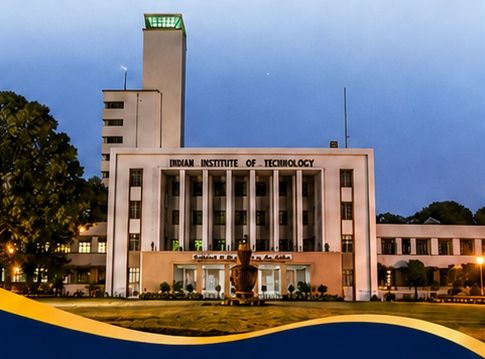
FOS2027
Fractional-order systems have emerged as a powerful framework for modelling, analysis and control of complex dynamical systems with memory and hereditary characteristics. They find wide applications in precision motion control, robotics, automation, smart materials, signal processing, power systems, biomedical engineering and cyber-physical systems.
FOS 2027 aims to bring together leading researchers, academicians, industry professionals and students worldwide to exchange ideas, present cutting-edge research and discuss future directions in fractional-order science and engineering.
The conference will feature plenary talks by internationally renowned experts, invited lectures, technical paper presentations, special sessions, tutorials, industry interactions and networking opportunities.

Manipal Universal Technology Business Incubator (MUTBI)
Incubated and supported at MAHE Manipal, fostering academic technology and research dissemination.